
 |
| Women were as much into hunting as men in prehistoric society |
John Konrad’s tweet (see below) about men communicating weekend plans like a military operation made me laugh because it was hillariously familiar.

The tweet's summary is:
When a man says: “I am leaving at 7 a.m. Saturday. I will return by noon.” That, according to him, is the complete operational intelligence required by the family.
A woman, on the other hand, apparently responds with a detailed intelligence briefing involving a flower festival, a yoga class, a friend’s child, a possible change of venue, a teacher’s meeting, a grocery list, and the unresolved question of whether there is any cream cheese left in the refrigerator. Somewhere in the middle of this briefing is the actual time at which she intends to leave the house.
This was hilalriously familiar because a few days back I was having a similar conversation with my wife while we were driving somewhere. We were discussing about the weekend plans, and I went into a monologue about when we would leave for my in-laws’ house, when would I return home, and what time I would start again the next day to pick them up.
After listening to my monologue for some time, my wife exclaimed: Why are all men - me, her father, her uncle - always so obsessed with planning the time and place coordinates of leaving and reaching somewhere?
My daughter, who was listening to sitting next to me, was smiling at the conversation which trigerred me into making this a Dad's teachable moment!
I got into a lengthy explaination about how this was probably evolutionary. Men, I said, had historically been tasked with hunting in groups. Hunting large animals - perhaps hippos or lions (depending on how adventurous our ancestors were!) - required planning the time, place and direction of attack with precision. It required coordination, distance estimation and a clear understanding of when to leave and when to return.
Women, on the other hand, stayed closer to the village or hut. They had to react when an animal strayed into the settlement or an insect into the hut, protect the children and the elderly, and hence remain alert to several things happening around them. Therefore, I concluded, men evolved into compulsive planners of time and place, while women developed greater sensory awareness and the ability to monitor multiple things simultaneously.
It sounded convincing in the car.
It even sounded perfectly 'scientific'.
Unfortunately, the more I read about it, the less certain I became.
There is some truth behind the broad idea that men and women historically performed different kinds of work. Anthropologists have long observed that in many foraging societies men hunted more often and women gathered more often, while women also spent more time looking after young children. It is not difficult to imagine how different activities could encourage different skills. Long-distance hunting would reward navigation, route planning and spatial memory. Gathering, childcare and life around the settlement would reward close observation, recognition of detail, memory of people and objects, and the ability to respond to several changing circumstances.
But the popular version of this story - men hunted while women stayed at home - is far too simplistic.
A 2023 study published in PLOS ONE, titled The Myth of Man the Hunter, examined ethnographic evidence from 63 foraging societies. It found that women participated in hunting in 79 percent of the societies for which suitable data was available. In many cases, this was not just opportunistic hunting when an animal happened to cross their path. Women deliberately hunted, used their own weapons and sometimes targeted large game.
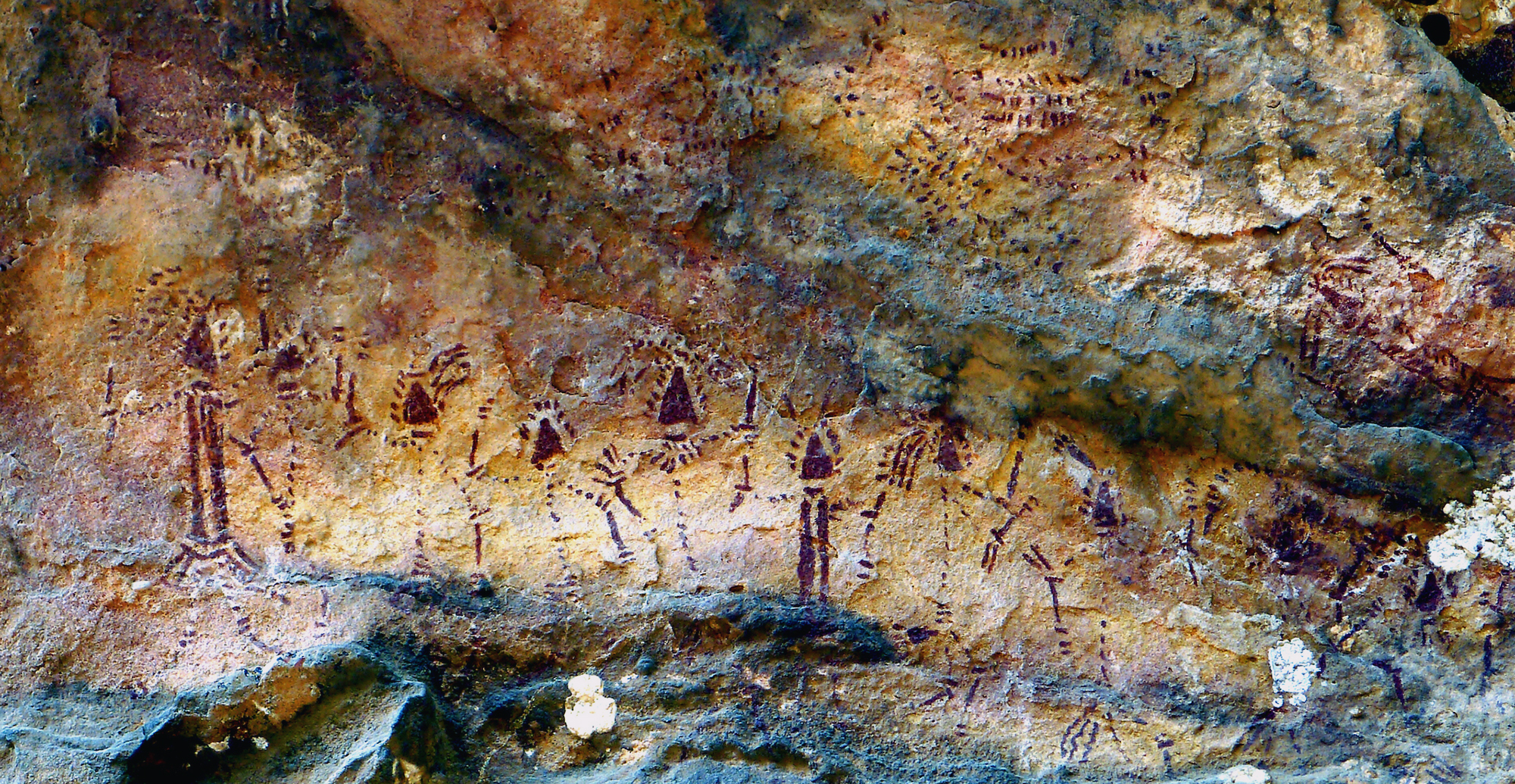
So my explanation to my daughter had already gone wrong at the starting point. Women did not merely remain in the hut waiting for a snake or wolf to appear. They also hunted, tracked, planned and navigated. Men did not merely go out to hunt and then return to the village. They also gathered, cared for children and contributed to activities closer to home. The division of labour existed, but it was a division of emphasis rather than a division of capability.
There is, however, some evidence for average differences in spatial skills. A 2019 meta-analysis of 266 studies on human navigation found that men performed better than women, on average, in large-scale navigation tasks. The effect was small to moderate, not enormous. More importantly, the difference varied considerably depending on the task, the environment, the age of the participants and whether the task involved pointing, remembering routes, estimating distances or learning a map.
This is an important distinction. Saying that men perform somewhat better on average in certain navigation experiments is not the same as saying that every man is better at finding his way than every woman. I know several women who can navigate cities, airports and unfamiliar neighbourhoods far better than I can 🙌. I also know men who can get lost in a shopping mall despite having Google Maps, a fully charged phone and a sign pointing towards the exit 😁.
Recent research has also questioned whether any average difference in navigation is directly an adaptation produced by ancestral hunting. A 2024 study found little evidence that sex differences in spatial ability are connected to the size of a person’s home range. The authors suggested that experience, learning and other biological factors may explain more than the simple evolutionary story that men travelled farther because they hunted.
Here is why evolution-based explanations become dangerous. They often begin with a genuine observation and then leap over several missing steps. Men may, on average, be somewhat better at certain spatial tasks. Therefore men must have evolved as hunters. Women may, in some settings, notice detail or context more readily. Therefore women must have evolved as protectors of the settlement. This reverse causation is a very satisfying narrative because it converts an everyday observation into a story about human origins.
But satisfying is not the same as proven.
The claim that women are naturally better at multitasking is even less established. Several studies have found no meaningful difference between men and women in multitasking performance. A 2018 study using an everyday computer-based scenario found no sex difference in accuracy, speed, route planning, memory or the management of distractions. A 2019 study from PLOS ONE similarly found that multitasking imposed substantial costs on everyone, but that those costs did not differ significantly between men and women.
There are some exceptions. A 2013 study found that women were better at devising strategies for locating a lost key in one multitasking experiment. A 2026 study found that men and women performed similarly on most visual and manual tasks, however, women were better at continuing a conversation while multitasking. This is perhaps the most realistic finding of all. The difference may not be that women can magically perform several unrelated tasks at once. It may be that women are less likely to mentally disconnect from the conversation while doing something else.
Which brings me back to the family discussion we had in the car.
Perhaps men communicate plans as coordinates because we are trying to reduce uncertainty. Departure time. Destination. Return time. These are the facts we believe will allow us to understand the plan.
Perhaps women communicate plans as a web of relationships and contingencies because the plan is not merely a movement from Point A to Point B. It includes who else is involved, what may change, what needs to be bought, who has to be picked up, which child has an activity, and whether the person responsible for the yoga class is available that weekend.
The man is asking: “What time are we leaving?”
The woman may be answering: “That depends on five other things, and all five of them are relevant.”
This may have something to do with evolution but may also have something to do with social conditioning, household responsibilities, personal experience and the simple fact that different people pay attention to different things.
My original explanation was a classic example of a father trying to turn an ordinary family observation into a grand theory of human nature. The research has made me less confident about the theory, but more appreciative of the observation.
Men may often want the coordinates first.
Women may often remember everything around the coordinates.
But the real difference is probably not that men plan while women react, or that men focus while women multitask.
It is that men ask, “What time are we leaving?”
And women already know why that is not the most important question.
.
Comments
Post a Comment