
Trip to Pune . . .

After I came to NITIE and saw how the alumni network is managed, I understood one of the major things lacking in BIT (my engg. school) was this. Serendipitously Sallu (Manish Saluja) one day called Shubham and told him about invisionfree forum that he had discovered and gave the idea to make it a discussion forum for their batchmates; when Shubham discussed the idea with me - we thought of extending it as a an Alumni Portal for all alumni of BIT and thus started BIT Alumni www.bitalumni.4t.com the (un)official portal for BITans. Today we have become a 500 member strong site and the largest online conglomeration of BITans. The next logical step to this venture was organizing Alumni meets in different cities. As a small beginning we organized a reunion of all BITans of our batch in Mumbai-Pune (15 turned up) but our meet has fired BITans in other cities as well for such ventures . . . its really been 'main chalta gay kaarwan bantaa gaya' for 4 of us founding members - myself, Shubham, Manish and Nimish.
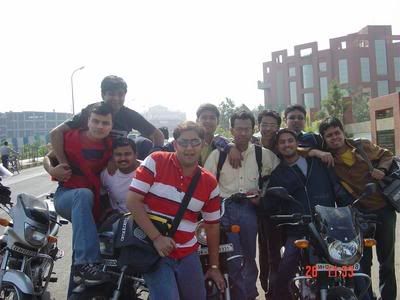
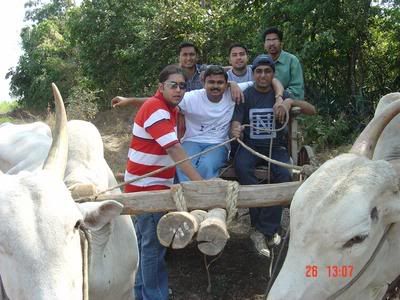
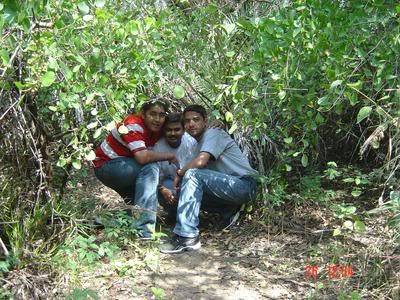
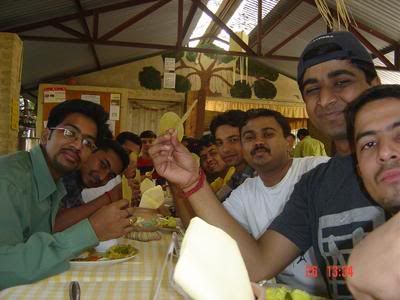
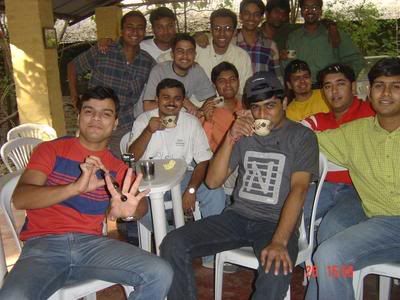
Posting some photos of the reunion outing below . . .


Comments

  1. I missed it... I missed it...
    I missed it.....:-((

    ReplyDelete
  2. the site www.bitalumni.4t.com doesn't work ................it says that they have changed their location and it takes to some other college site

    ReplyDelete

Post a Comment

Popular posts from this blog

Ekla Chalo re

Watched "Bose- The forgotten Hero" on Saturday. Gem of a movie and probably the best of Shyam Benegal. Subhash Chandra Bose has always been an inspiring character in the history for the youth. This post however is not about the movie, its about the lead song 'Tanha Rahee' which is based on the poem 'Ekla Chalo Re' by Gurudev Rabindranath Tagore. I had pasted the English translation of this poem on my blog earlier. http://the-complete-man.blogspot.com/2004/12/tsunami-times_30.html However, yesterday I found the original bengali text of the poem and found that the meaning in the above translation was not exact. So I have endeavourer (with the help of Shubham ) to re-translate it into English and Hindi by myself. Here is the output of my work: Bengali Jodi Tor Dak Soone Keu Na Asse Tobe Ekla Chalo re Ekla Chalo Ekla Chalo Ekla Chalore Jodi Keu Katha Na Kai Ore Ore O Abhaga Jodi Sabai Thake Mukh Firae Sabai Kare Bhay Tabe Paran Khule O Tui Mukh Fute Tor Maner Kath...

Vikramaditya - Myth or Reality

  A statue of Vikramaditya at  Vikramaditya ka Tila / Vikramaditya's Singhasan Battisi On a recent visit to Ujjain, I found myself drawn to the city's extraordinary blend of history, mythology, and spirituality. As I stood before the Mahakaleshwar Jyotirlinga, I reflected on its significance as one of India’s most revered shrines. Yet, amidst these sacred surroundings, I encountered narratives of Vikramaditya - the legendary king of Ujjain, celebrated for his valor and wisdom, who's name resonates from the folklore of locals to every part of India. Every time we celebrate a festival in India, it is marked with a tithi i.e. date as per the Indian calendar - which is called the Vikram Samvat calendar, attributed to being founded by Vikramaditya of Ujjaini (the then name of Ujjain). What struck me, however, was the curious fact that despite Vikramaditya’s pivotal place in Indian cultural memory, his existence as a historical figure lacks definitive evidence. My exploration l...

A lakh! A Crore! ... then why not an Arab?

India is a true melting pot - and the language we speak are true representations of the same. In any given location, the way people speak (the dialect, the accent and vocabulary inclusive) is a wonderful mix of local, regional, national and even a bit of international influences. To take some examples: Bangalore lingo: "Enjoy Madi!" Mumbai lingo: "Its all over Akhha Mumbai yaar" Some International sprinkled in: "Dude! Hows life yaar?" All in all - India has been pretty successful in integrating its regional disparities with nationally pervasive trends and a bit of International lingo as well (thanks to its diaspora). The same has happened in terms of the numeral terminologies that we use. In India - even with the English media, we use terms like a 'lakh' (= hundred thousand) or a 'crore' (= ten million). But what is surprising is that beyond these, the media usually follows the international numeric term - billion. This is in spite of th...